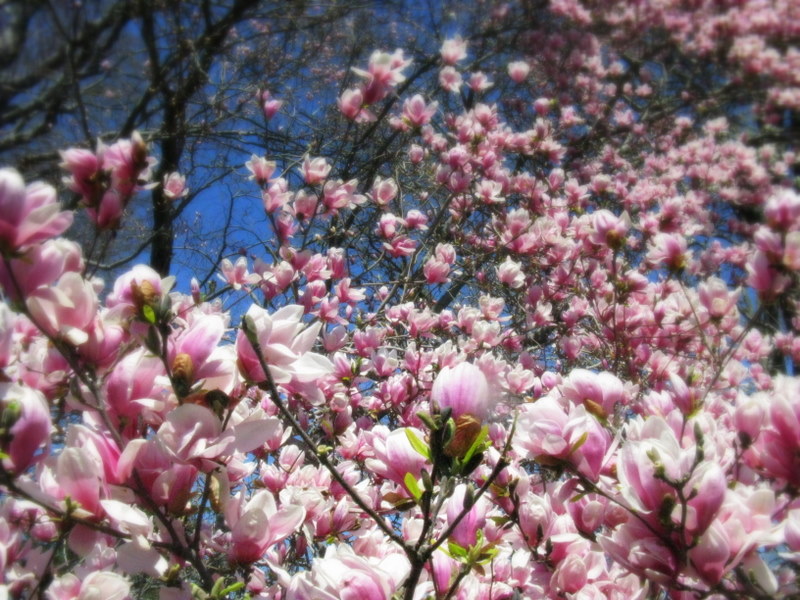
Monday, April 6, 2009

EASTER


Easter (Greek: Πάσχα,(Ethiopic), Pascha) is an important annual religious feast in the Christian liturgical year. In Christian belief, Jesus was resurrected from the dead three days after his crucifixion. Many Christian denominations celebrate this resurrection on Easter Day or Easter Sunday (also Resurrection Day or Resurrection Sunday), two days after Good Friday. The chronology of his death and resurrection is variously interperated to be between 26 and 36 AD.
Easter also refers to the
season of the church year called Eastertide or the Easter Season. Traditionally the Easter Season lasted for the forty days from Easter Day until Ascension Day but now officially lasts for the fifty days until Pentecost. The first week of the Easter Season is known as Easter Week or the Octave of Easter. Easter also marks the end of Lent, a season of prayer and penance.
Easter is a
moveable feast, meaning it is not fixed in relation to the civil calendar. Easter falls at some point between late March and late April each year (early April to early May in Eastern Christianity), following the cycle of the Moon. After several centuries of disagreement, all churches accepted the computation of the Alexandrian Church (now the Coptic Church) that Easter is the first Sunday after the Paschal Full Moon, which is the first moon whose 14th day (the ecclesiastic "full moon") is on or after March 21 (the ecclesiastic "vernal equinox").
Easter is linked to the Jewish
Passover not only for much of its symbolism but also for its position in the calendar. It is also linked to Spring Break, a secular school holiday (customarily a week long) celebrated at various times across North America, and characterized by road trips and bacchanalia.
Cultural elements, such as the
Easter Bunny, have become part of the holiday's modern celebrations, and those aspects are often celebrated by many Christians and non-Christians alike. There are also some Christian denominations who do not celebrate Easter.
Theological Significance
The
New Testament links the Last Supper and Jesus’ crucifixion with Passover and the Exodus from Egypt. As Jesus prepared himself and his disciples for his death in the upper room during the Last Supper, he gave the Passover meal a new meaning. He identified the loaf of bread and cup of wine as symbolizing his body soon to be sacrificed and his blood soon to be shed. 1 Corinthians 5:7 states, "Get rid of the old yeast that you may be a new batch without yeast—as you really are. For Christ, our Passover lamb, has been sacrificed"; this refers to the Passover requirement to have no yeast in the house and to Christ's identification as the Paschal lamb.

One interpretation of the
Gospel of John is that Jesus, as the Passover lamb, was crucified at roughly the same time as the Passover lambs were being slain in the temple, on the afternoon of Nisan 1 This interpretation, however, is inconsistent with the chronology in the Synoptic Gospels. It assumes that "the preparation of the passover" in John 19:14 literally refers to Nisan 14 (Preparation Day for the Passover) and not necessarily to Yom Shishi (Friday, Preparation Day for the Sabbath) and that "eat the passover" in John 18:28 refers to the eating of the Passover lamb, not to eating any of the sacrifices that were offered during the Days of Unleavened Bread.
Dates of Easter (In Gregorian 2009-2020)
2009
April 12
2010
April 4
2011
April 24
2012
April 8
2013
March 31
May 5
March 27
2014
April 20
2015
April 5
2016
March 27
2017
April 16
2018
April 1
2019
March 24
2020
April 12

Easter and the holidays that are related to it are moveable feasts, in that they do not fall on a fixed date in the Gregorian or Julian calendars (both of which follow the cycle of the sun and the seasons). Instead, the date for Easter is determined on a lunisolar calendar, as is the Hebrew calendar.
In
Western Christianity, using the Gregorian calendar, Easter always falls on a Sunday between March 22 and April 25 inclusively. The following day, Easter Monday, is a legal holiday in many countries with predominantly Christian traditions. In Eastern Christianity, which use the Julian calendar for religious dating, Easter also falls on a Sunday between March 22 and April 25 inclusive of the Julian calendar. In terms of the Gregorian calendar, due to the 13 day difference between the calendars between 1900 and 2099, these dates are between April 4 and May 8 inclusive.

The precise date of Easter has at times been a matter for contention. At the
First Council of Nicaea in 325 it was decided that all Christians would celebrate Easter on the same day, which would be computed independently of any Jewish calculations to determine the date of Passover. It is probable, though, that no method of determining the date was specified by the Council. (No contemporary account of the Council's decisions has survived.) Epiphanius of Salamis wrote in the mid-4th century: ...the emperor...convened a council of 318 bishops...in the city of Nicea...They passed certain ecclesiastical canons at the council besides, and at the same time decreed in regard to the Passover that there must be one unanimous concord on the celebration of God's holy and supremely excellent day. For it was variously observed by people.... In the years following the council, the computational system that was worked out by the church of Alexandria came to be normative. It took a while for the Alexandrian rules to be adopted throughout Christian Europe, however. The Church of Rome continued to use an 84-year lunisolar calendar cycle from the late third century until 457. The Church of Rome continued to use its own methods until the 6th century, when it may have adopted the Alexandrian method as converted into the Julian calendar by Dionysius Exiguus (certain proof of this does not exist until the ninth century). Early Christians in Britain and Ireland also used a late third century Roman 84-year cycle. This was replaced by the Alexandrian method in the course of the 7th and 8th centuries. Churches in western continental Europe used a late Roman method until the late 8th century during the reign of Charlemagne, when they finally adopted the Alexandrian method. However, with the adoption of the Gregorian calendar by the Catholic Church in 1582 and the continuing use of the Julian calendar by Eastern Orthodox Churches, the date on which Easter is celebrated again deviated, and the discrepancy continues to this day.

Monday, March 30, 2009

I Had a Birthday


Birthday is the name given to the date of the anniversary of the day of a person's birth. People in many cultures celebrate this anniversary. In some languages, the word for birthday literally translates as "anniversary". Birthdays are traditionally marked by celebrations including a birthday party or, in some particular cases, a rite of transition.
It is thought the large-scale celebration of birthdays in Europe began with the non-Christian cult of Mithras, which originated in Persia, and was spread by soldiers throughout the Roman Empire. Such celebrations were uncommon previously so practices from other contexts such as the Saturnalia were adapted for birthdays.
Because many Roman soldiers took to
Mithraism, it was distributed widely and its influence was spread throughout the empire until it was supplanted by Christianity.
The birthday cake is traditionally highly decorated, and typically covered with lit candles when presented, the number of candles signifying the age of the celebrant. The person whose birthday it is may make a silent wish and then blow out the candles. After that, the person can open their presents. It is also common for the person celebrating their birthday to cut the initial piece of the cake as a newlywed couple might with a wedding cake.
Birthday cakes date back as far as the
Middle Ages when the English would conceal symbolic items such as gold coins, rings and thimbles inside their cakes. Each item was associated with a prediction. For example, a person finding a gold coin in a birthday cake would supposedly become wealthy; a person discovering a thimble would never marry.
Sometimes special candles are substituted for the many individual candles in the shape of a
numeral. For example, on the fifth birthday, there may be one candle on the cake in the shape of the numeral five, and on the fiftieth birthday there may be two candles on the cake, one in the shape of the numeral five followed by the other in the shape of the number zero.
Yesterday I turned 60. I don't feel 60, and that number seems SO HIGH. I think I will start counting backwards....so next year it'll be 29 Again.......and Again........

Sunday, March 22, 2009

Texas Signs of Spring


Spring has come to Northeast Texas and is Popping out Everywhere! I have already mowed and weed eated the yard twice, so the yard work chores have begun. Got a new mower this year, and it is making the work so much easier. I did not realize the old 12 year mower was such and Antique! All the trees have not budded out, and when the Pecan and Bois D' Arc do, then we are assured of no more frosty freezes. They are on the verge!

Tuesday, March 10, 2009

St Patrick


Saint Patrick (Latin: Patricius, Irish: Naomh Pádraig), said to have been born Maewyn Succat (Latin: Magonus Succetus), was a Roman Britain-born Christian missionary and is the patron saint of Ireland along with Brigid of Kildare and Columba. When he was about sixteen he was captured by Irish raiders and taken from his native Wales as a slave to Ireland, where he lived for six years before escaping and returning to his family. After entering the church, he later returned to Ireland as a missionary in the north and west of the island, but little is known about the places where he worked and no link can be made between Patrick and any church. By the eighth century he had become the patron saint of Ireland. The Irish monastery system evolved after the time of Patrick and the Irish church did not develop the diocesan model that Patrick and the other early missionaries had tried to establish.
The available body of evidence does not allow the dates of Patrick's life to be fixed with certainty, but it appears that he was active as a missionary in Ireland during the second half of the fifth century. Two letters from him survive, along with later
hagiographies from the seventh century onwards. Many of these works cannot be taken as authentic traditions. Uncritical acceptance of the Annals of Ulster (see below) would imply that he lived from 340 to 460, and ministered in what is modern day northern Ireland from 428 onwards.
Most modern studies of Saint Patrick follow a variant of T. F. O'Rahilly's "Two Patricks" theory. That is to say, many of the traditions later attached to Saint Patrick originally concerned Palladius, a deacon from Gaul who came to Ireland, perhaps sent by Pope Celestine I (died 431). Palladius was not the only early cleric in Ireland at this time. Saints Auxilius, Secundinus and Iserninus are associated with early churches in Munster and Leinster. By this reading, Palladius was active in Ireland until the 460s.

Prosper of Aquitaine's contemporary chronicle states:
Palladius was ordained by Pope Celestine and sent to the Irish believers in Christ as their first bishop. Prosper associates this with the visits of
Germanus of Auxerre to Britain to suppress the Pelagian heresy and it has been suggested that Palladius and his colleagues were sent to Ireland to ensure that exiled Pelagians did not establish themselves among the Irish Christians. The appointment of Palladius and his fellow-bishops was not obviously a mission to convert the Irish, but more probably intended to minister to existing Christian communities in Ireland. The sites of churches associated with Palladius and his colleagues are close to royal centres of the period: Secundus is remembered by Dunshaughlin, County Meath, close to the Hill of Tara which is associated with the High King of Ireland; Kilashee, County Kildare, close to Naas with links with the Kings of Leinster, is probably named for Auxilius. This activity was limited to the southern half of Ireland, and there is no evidence for them in Ulster or Connacht. Although the evidence for contacts with Gaul is clear, the borrowings from Latin into the Old Irish language show that links with former Roman Britain were many. Saint Iserninus, who appears to be of the generation of Palladius, is thought to have been a Briton, and is associated with the lands of the Uí Cheinnselaig in Leinster. The Palladian mission should not be contrasted with later "British" missions, but forms a part of them. Saint Patrick went under the gaelic second name of Daorbae (meaning - He was enslaved) so, he was known as Patricius Daorbae, during his Irish ministry.
March 17, popularly known as St. Patrick's Day, is believed to be his death date and is the date celebrated as his feast day. The day became a feast day in the universal church due to the influence of the Waterford-born Franciscan scholar Luke Wadding, as a member of the commission for the reform of the Breviary in the early part of the 17th century.
For most of Christianity's first thousand years, canonisations were done on the diocesan or regional level. Relatively soon after the death of people considered to be very holy people, the local Church affirmed that they could be liturgically celebrated as saints. As a result, St. Patrick has never been formally
canonised by a Pope; nevertheless, various Christian churches declare that he is a Saint in Heaven (he is in the List of Saints). He is still widely venerated in Ireland and elsewhere today.
St. Patrick is also
venerated in the Orthodox Church, especially among English-speaking Orthodox Christians living in the United Kingdom and the Republic of Ireland and in North America. There are Orthodox icons dedicated to him.
On March 17, 1776, the day that British forces under General
Sir William Howe evacuated Boston during the American Revolutionary War, the password of the day at General George Washington's Continental Army encampment was "Saint Patrick". The date is observed as Evacuation Day, an official holiday in Suffolk County, Massachusetts, USA. Massachusetts has the most Irish ancestry of the United States in terms of percentage of total population.

Tuesday, March 3, 2009

Daylight Saving Time


Benjamin Franklin


William Willett


Daylight Saving Time
(DST; also, summer time in British English; is the convention of advancing clocks so that afternoons have more daylight and mornings have less. Typically clocks are adjusted forward one hour near the start of spring and are adjusted backward in autumn. Modern DST was first proposed in 1907 by the English builder William Willett. Many countries have used it since then; details vary by location and change occasionally.
The practice is controversial. Adding daylight to afternoons benefits retailing, sports, and other activities that exploit sunlight after working hours but causes problems for farming, entertainment and other occupations tied to the sun. Traffic fatalities are reduced when there is extra afternoon daylight; its effect on health and crime is less clear. Although an early goal of DST was to reduce evening usage of
incandescent lighting, formerly a primary use of electricity, modern heating and cooling usage patterns greatly differ, and research about how DST currently affects energy use is limited and often contradictory.
DST's occasional clock shifts present other challenges. They complicate timekeeping and can disrupt meetings, travel, billing, recordkeeping, medical devices, and heavy equipment. Many computer-based systems can adjust their clocks automatically, but this can be limited and error-prone, particularly when DST rules change.
Origin

Although not punctual in the modern sense, ancient civilizations adjusted daily schedules to the sun more flexibly than modern DST does, often dividing daylight into twelve equal hours regardless of day length, so that each daylight hour was longer during summer. For example, Roman water clocks had different scales for different months of the year: at Rome's latitude the third hour from sunrise, hora tertia, started by modern standards at 09:02 solar time and lasted 44 minutes at the winter solstice, but at the summer solstice it started at 06:58 and lasted 75 minutes. After ancient times, equal-length civil hours eventually supplanted unequal, so civil time no longer varies by season. Unequal hours are still used in a few traditional settings, such as some Mount Athos monasteries.

Benjamin Franklin suggested firing cannons at sunrise to waken Parisians.
During his time as an American envoy to France,
Benjamin Franklin, author of the proverb, "Early to bed, and early to rise, makes a man healthy, wealthy and wise", anonymously published a letter suggesting that Parisians economize on candles by rising earlier to use morning sunlight. This 1784 satire proposed taxing shutters, rationing candles, and waking the public by ringing church bells and firing cannons at sunrise. Franklin did not propose DST; like ancient Rome, 18th-century Europe did not keep accurate schedules. However, this soon changed as rail and communication networks came to require a standardization of time unknown in Franklin's day.
The prominent English builder and outdoorsman
William Willett conceived DST in 1905 during a pre-breakfast ride, when he observed with dismay how many Londoners slept through a large part of a summer day. An avid golfer, he also disliked cutting short his round at dusk. His solution was to advance the clock during the summer months, a proposal he published two years later. He lobbied unsuccessfully for the proposal until his death in 1915. Germany, its World War I allies, and their occupied zones were the first European nations to use Willett's invention, starting April 30, 1916. Britain, most of its allies, and many European neutrals soon followed suit. Russia and a few other countries waited until the next year; and the United States adopted it in 1918. Since then, the world has seen many enactments, adjustments, and repeals.
Get READY!. Set your clocks forward one hour this Sunday, March 7, 2009 at 2:00 AM.
SPRING FORWARD!


Wednesday, February 25, 2009

Springing Into Spring


Spring is one of the four temperate seasons. Spring marks the transition from winter into summer.

Definition of Spring

According to the astronomical definition, spring begins on the
Vernal Equinox (usually March 21 in the Northern Hemisphere, and September 21 in the Southern Hemisphere), and lasts until the summer solstice (usually June 22 in the Northern Hemisphere and December 22 in the Southern Hemisphere). According to this definition, therefore, the day called Midsummer's Day in some traditions is the first day of Summer. Meteorologists generally define the beginning of spring as March 1 in the Northern Hemisphere and September 1 in the Southern Hemisphere. According to the Celtic tradition which is based solely on daylight and the strength of the noon sun spring begins in early February (near Imbolc or Candlemas) and continues until early May (Beltane). Unlike the other three seasons, people in relatively cool climates are likely to use the astronomical definition for the beginning of spring in popular jargon but retain the meterological definition for the other three seasonal turning points.

The phenological definition of spring relates to vindicators, the blossoming of a range of plant species, and the activities of animals, or the special smell of soil that has reached the temperature for micro flora to flourish. The first swallow to arrive or the flowering of lilac may be the indicator of spring. It therefore varies according to the climate and according to the specific weather of a particular year.
Events that occur during spring
In recent decades
season creep has been observed, which means that many phenological signs of spring are occurring earlier in many regions by a couple of days per decade.
In spring, the axis of the
Earth is tilted toward the Sun and the length of daylight rapidly increases for the relevant hemisphere. The hemisphere begins to warm significantly causing new plant growth to "spring forth," giving the season its name. Snow, if a normal part of winter, begins to melt and streams swell with runoff. Frosts, if a normal part of winter, become less severe. Many temperate climates have no snow and may have no frosts, and the air and ground temperature increase. Many flowering plants bloom this time of year, in a long succession sometimes beginning even if snow is still on the ground, continuing into early summer. In normally snowless areas "spring" may begin as early as February (Northern Hemisphere) heralded by the blooming of deciduous magnolias, cherries, and quince, or August (Southern Hemisphere) in the same way. Subtropical and tropical areas have climates better described in terms of other seasons, eg dry or wet, or monsoonal, or cyclonic. Often the cultures have locally defined names for seasons which have little equivalence to the terms originating in Europe. Many temperate areas have a dry spring, and wet autumn (fall), which brings about flowering in this season more consistent with the need for water as well as warmth. Subarctic areas may not experience "spring" at all until May or even June, or December in the outer Antarctic.
While spring is a result of the warmth of the turning of the earth's axis, the weather in many parts of the world is overlain by events which appear very erratic taken on a year to year basis, but the rainfall in spring, or any season, follow trends more related to longer cycles or events created by ocean currents and ocean temperatures which move to different complex effects. A good and well researched example being the
El Nino effect and the Southern Oscillation Index.
Unstable
weather may more often occur during spring, when warm air begins on occasions to invade from lower latitudes, while cold air is still pushing on occasions from the Polar Regions. Flooding is also most common in and near mountainous areas during this time of year because of snowmelt, many times accelerated by warm rains. In the United States, Tornado Alley is most active this time of year, especially since the Rocky Mountains prevent the surging hot and cold air masses from spreading eastward and instead force them directly at each other. Besides tornadoes, supercell thunderstorms can also produce dangerously large hail and very high winds, for which a severe thunderstorm warning or tornado warning is usually issued. Even more so than winter, the jet streams play an important role in unstable and severe weather in the springtime in the Northern Hemisphere.
As mentioned, spring is a term for temperate climates, but the news of many countries covers large parts of continents and so we may hear of the
hurricane season (Northern Hemisphere) and cyclone season Southern Hemisphere officially beginning in late spring. This is less to do with the relationship of spring to hurricanes / cyclones but more to do with the extent of media coverage and the use of seasonal terms from the one part of a continent to make reference to what is happening in other less temperate climates. The monsoon season is the monsoon season, and not some variation of spring or summer, except for those perceiving it from a temperate climate background.
Spring is seen as a time of growth, renewal, of new life (both plant and animal) being born. The term is also used more generally as a metaphor for the start of better times, as in
Prague Spring.
Spring is the end of
winter, and the culmination of lengthening days. The Christian season of birth and renewal has Easter at this time.
Spring in the Southern Hemisphere is different in several significant ways to that of the Northern Hemisphere. This is because: there is no land bridge between
Southern Hemisphere countries to the Arctic zone capable of bringing in cold air without the temperature mitigating effects of extensive tracts of water; the vastly greater amount of ocean in the Southern Hemisphere at all latitudes; at this time in Earth's geologic history the Earth has an orbit which brings it in closer to the Southern Hemisphere for its warmer seasons; there is a circumpolar flow of air (the roaring 40's and 50's) uninterrupted by large land masses; no equivalent jet streams; and the peculiarities of the reversing ocean currents in the Pacific...

Tuesday, February 24, 2009

What is a Grandparent?


Grandparents are the father or mother of a person's own father or mother, being respectively a grandfather (also colloquially grandpa, grandad, gramps, pop or many other terms) and a grandmother (also grandma, granny, grandmama, grandmums, gran, nana or many other terms). Everyone has a maximum of four genetic grandparents, eight genetic great-grandparents, sixteen genetic great-great-grandparents, etc.
In cases where the parents are unwilling or unable to provide adequate care for their children, grandparents often take on the role of primary caregivers. Even when this is not the case, grandparents often participate in the raising of children.
In traditional cultures, grandparents often had a direct and clear role in relation to the care and
nurture of children.
One can also be a step-grandparent. A step-grandparent can be your parent's stepparent or your stepparent's parent. A stepparent's stepparent is called a step-step-grandparent, etc.
The various words for grandparents at times may also be used to refer to any elderly person, especially the terms gramps, granny, grandfather, grandmother and even more types that most families make up themselves.
Two individuals who have grandparents in common, but are not siblings, are called
first cousins. The parents of a person's first cousins are his or her uncles and aunts.


When used as a noun (i.e., "…a grandparent walked by"), grandfather and grandmother are usually used, although grandpa/grandma and granny are often used. When preceded by "my…" (i.e., "…my grandpa walked by"), all forms are common (anywhere from "…my grandfather…" to "…my gramps…"). All forms can be used in plural, but gramps (plural gramps) is rare.
In writing, grandfather and grandmother are most common. In speech, grandpa and grandma are most common in the
US, where grandfather/-mother is very rare when referring to a grandparent in person. In Britain and New England nan, nana, nanny and other variations are often used for grandmother in both writing and speech.
Numerous other variants exist, such as gramp and grandpap or pop for grandfather and grandmom, grandmama and grammy for grandmother, etc. Because of the terms' unavoidable familiarity, there are many simplified versions as well, including gogo,grampy, granddaddy, grandpappy, etc.
Given that people may have two living sets of grandparents, some confusion arises from calling two people "grandpa" or "grandma", so often two of the other terms listed above are used for one set of grandparents. Another common solution is to call grandparents by their first names ("Grandpa George", "Grandma Anne", etc.) or by their family names ("Grandpa Jones", "Grandma Smith"). In America (where most families are of mixed ethnicity), many families call one set of grandparents by their ethnic names (i.e.,
Hispanic grandparents might be called "Abuelo" and "Abuela", French grandparents might be called "Pépé" and "Mémé", or Dutch and German grandparents might be called "Opa" and "Oma"). As you can see, there are many different types of names for "grandma" and "grandpa" for different languages and cultures.


Great-grandparents
The parents of a grandparent are called all the same names (grandfather/-mother, grandpa/-ma, granddad/-ma, etc.) with the prefix "great-" added. Thus, one's father's father's father is a great-grandfather. The same applies to one's great-grandparent's parents (great-great-grandparents). Also note that two individuals who share the same great-grandparents but are not siblings or first cousins are called Second Cousins to each other because second cousins are the grandchildren of your grandparent`s siblings.
All This To Celebrate the Impending Arrival of My First Great Grand Child in July. My Much too young Grand-daughter who was born to her much too young mother is expecting. (At least I won't be so OLD, that I Can't teach the child some infinate knowledge!)